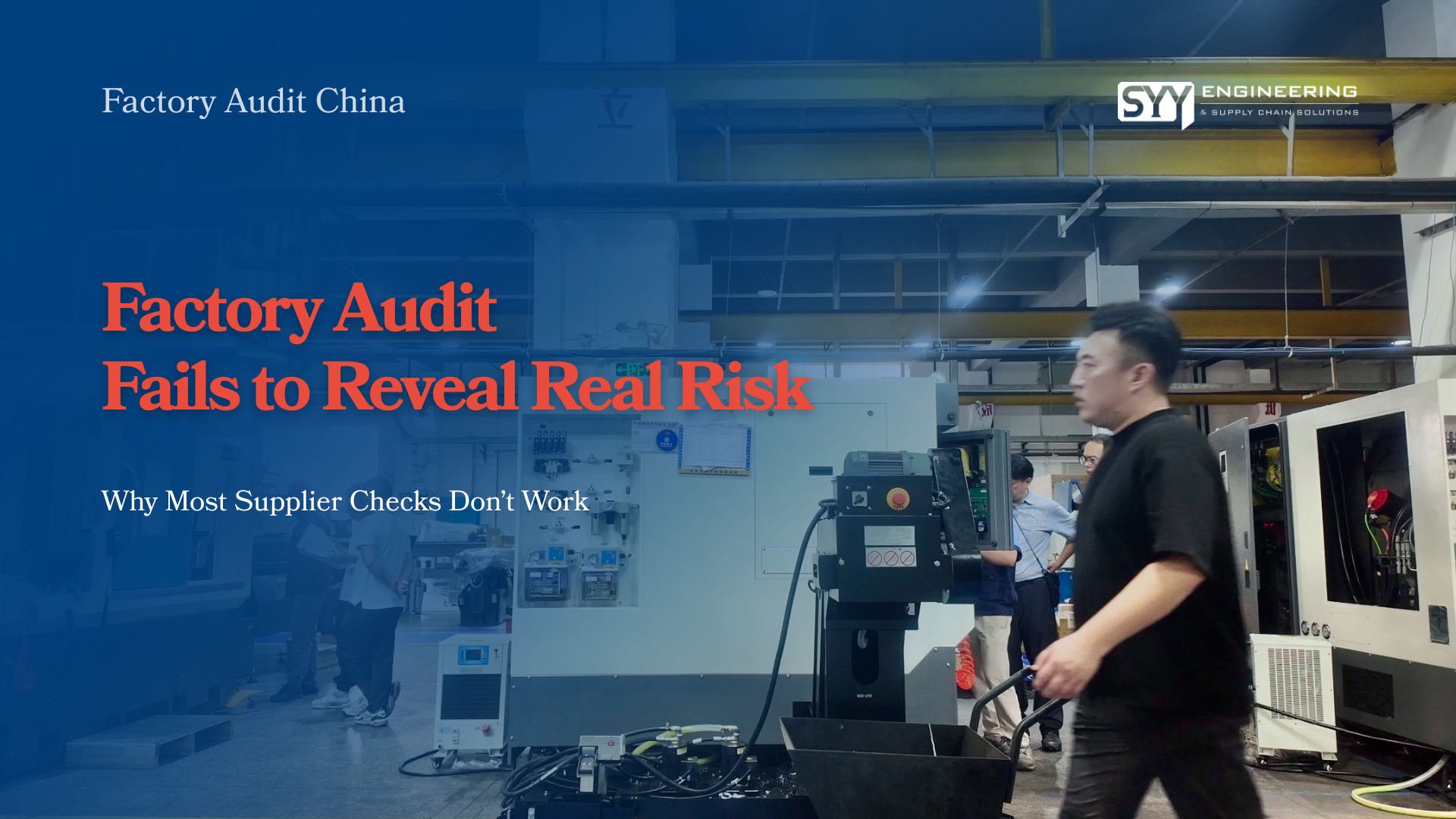
Factory Audit China: Why Audits Fail to Reveal Execution Risk
Many factory audits in China evaluate visible conditions but fail to reveal execution instability, hidden outsourcing, and real production risk before supplier selection.
Factory audits evaluate visible conditions.
But visible conditions do not guarantee stable execution.
An audit shows what exists at a specific moment.
It does not confirm what will happen during production.
Audits Confirm Appearance — Not Capability
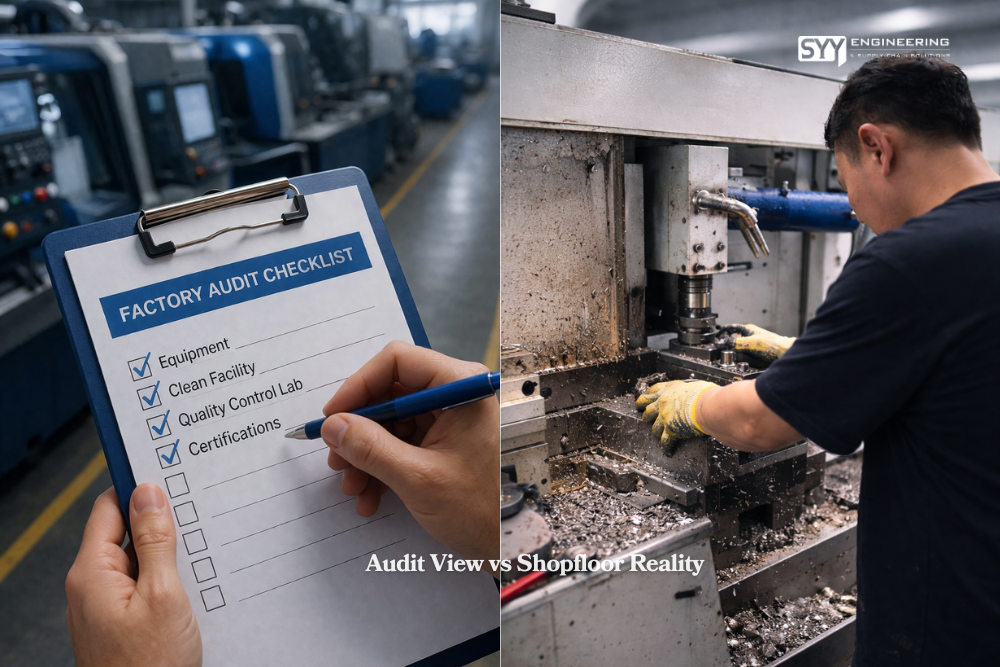
Checklist-based audits confirm appearance but do not reflect real execution capability
Many factory audits in China focus on:
• certificates
• facility size
• equipment lists
• general impressions
These elements are easy to observe and document.
But they do not answer the most important question:
Can the supplier actually support stable execution under real operating conditions?
A passed audit often means:
Everything appears acceptable.
But production performance is not determined by appearance.
An Audit Takes Place In A Controlled Environment
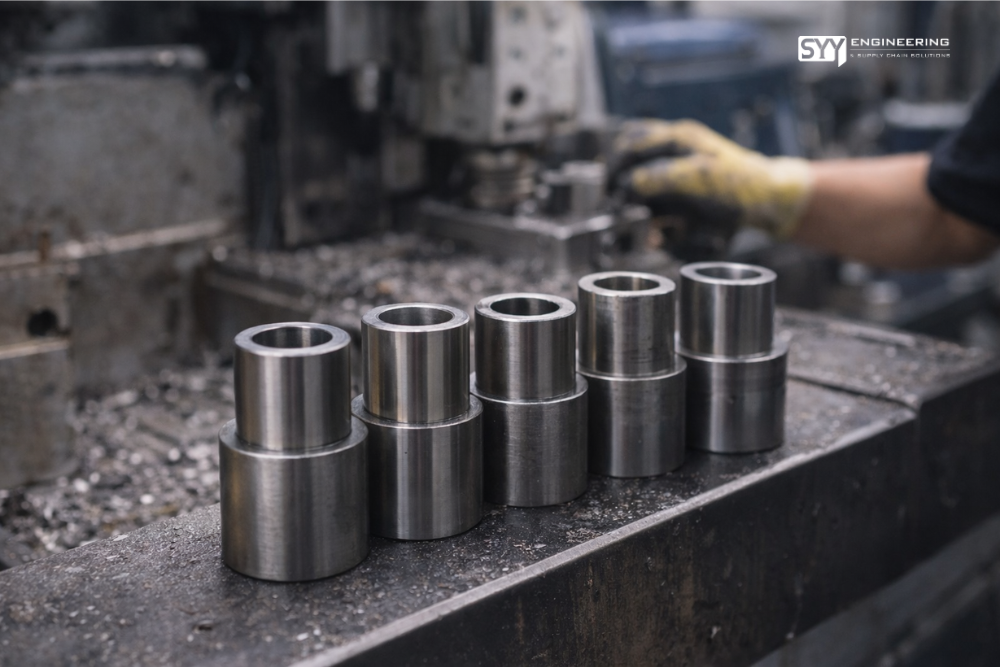
Instability often emerges during batch production rather than during an audit
An audit is conducted in a stable and prepared environment.
Production, however, takes place when:
• time pressure increases
• parameters are adjusted
• volumes scale
This is where real capability is tested.
Audits capture a moment.
Production measures consistency over time.
We have seen suppliers that:
• pass audits without difficulty
But during production:
• tolerance control fails
• process stability is lost
• consistent quality cannot be maintained
Three Risks That Audits Do Not Detect
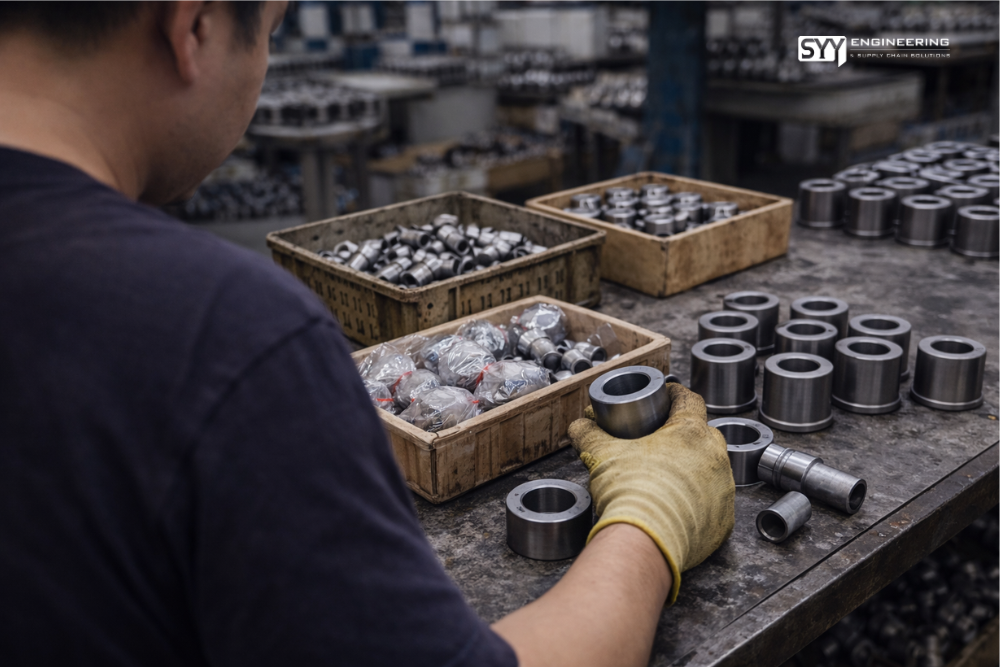
Critical risks such as hidden outsourcing and process instability are rarely visible during standard audits
• Hidden outsourcing
Critical processes are not performed in-house.
• Process instability
Production depends on experience rather than controlled systems.
• Engineering misalignment
Drawings are interpreted differently from real execution.
These risks rarely appear during audits.
They appear when production begins.
The Real Limitation Of Factory Audits
A factory audit answers one question:
What exists today.
But it does not answer the more critical question:
What will happen during production.
This is the gap.
Audit = Snapshot
Execution = Performance over time
Why This Matters In Supplier Selection
Many companies rely on audits to decide:
Which supplier to choose.
This creates a structural risk.
Because the audit becomes:
A shortcut for supplier selection.
A passed audit does not equal a reliable supplier.
A Factory Audit Is Not A Decision Tool
A factory audit is not designed to answer:
“Should this supplier be selected?”
It only answers:
What is visible at the time of the visit.
A real supplier decision requires deeper verification.
What Comes Next: Supplier Verification
A factory audit is only the first layer.
It evaluates what is visible at a specific moment.
Supplier verification answers a different question:
Can this supplier support stable execution under real operating conditions?
This includes:
• process validation
• engineering alignment
• execution capability
This is where real supplier decisions begin.
This is where real supplier decisions are made.
FAQ
1. What is a factory audit in China?
A factory audit evaluates supplier conditions and basic capability.
2. Why do audits fail?
Because they focus on visible elements rather than execution stability.
3. Can audit results be trusted?
They provide partial information — but not full supplier validation.
4. What should happen after an audit?
Supplier verification is required to confirm execution capability.
A factory audit does not tell you whether a supplier will succeed.
It only shows what is visible at a specific moment.
If supplier selection is based only on an audit,
the execution risk has already been accepted.
Talk to Our Engineers
If you are sourcing in China:
Do not rely on impressions.
Most supplier problems begin long before production starts.
SYY helps European companies:
• structure supplier decisions
• validate real execution capability
• compare suppliers with engineering logic
• reduce hidden execution risk
• turn factory visits into clear decisions
Tags
Continue Reading
Explore related insights on the same topic.
How to Compare Suppliers After a China Factory Visit
Supplier comparison after factory visits should be based on execution capability, process stability, engineering alignment, and operational risk — not impressions or price alone.
Supplier Visit & Capability Validation in China
Structured supplier visits in China with engineering validation, decision-maker access, and clear Go / No-Go outputs. Turn factory visits into real decisions.
What to Verify During a China Factory Visit
Most factory visits in China focus on observation rather than validation. Learn what must be verified on site to evaluate execution capability and production stability.