
Can China’s Zero-Carbon Factory Data Support EU Buyers?
Can China’s zero-carbon factory data support an EU buyer’s import, product, procurement or local-production decision? The answer depends on evidence scope, method, responsibility and validation.
The direct answer is yes—but only for a clearly defined European decision. Chinese zero-carbon factory data cannot automatically replace EU compliance, product data or verification requirements.
The programme can help a European buyer assess whether a supplier has more mature energy management, carbon accounting, metering and continuous-improvement capabilities. To use that information for an import, product, procurement or local-production decision, the European team must still confirm the object, boundary, method, responsible operator and validation route.
This is not a binary question about whether Europe recognises a Chinese label. For a CEO, COO, Managing Director or procurement leader, the more useful question is: which decision can this evidence support, and which European requirement can it not replace?
What Does China’s National Zero-Carbon Factory Programme Prove?
On 22 July 2026, China’s Ministry of Industry and Information Technology (MIIT) published its notice organising national zero-carbon factory development. The notice defines zero-carbon factory development as a process of continuously reducing carbon dioxide emissions within a defined boundary, through technological innovation, structural adjustment and management optimisation, with emissions progressively approaching near zero.
Applicants must establish a carbon-accounting system. Relevant data must follow measurable, reportable and verifiable principles and be true, accurate, complete and reliable. The programme also requires energy and carbon indicators, annual targets, progress reporting and continuing management.
A place on the national zero-carbon factory construction list is not final status. Listed organisations must complete the development work and pass assessment and acceptance before they formally become national zero-carbon factories.
For an EU buyer, the framework can therefore indicate four useful capabilities:
structured energy-management discipline;
a functioning carbon-accounting system;
digital metering, data retention and reporting capability;
defined indicators, ownership and continuous improvement.
It cannot, on its own, prove that an imported good complies with CBAM, that a product has a complete Digital Product Passport dataset, that a product carbon footprint is acceptable, or that an EU operator has discharged its own responsibilities.
Why Should EU Buyers Pay Attention Now?
On 20 July 2026, the European Commission launched the Digital Product Passport Registry and its testing environment. The Registry is part of the infrastructure established under the Ecodesign for Sustainable Products Regulation (ESPR). It does not mean that every product already requires a Digital Product Passport (DPP); product scope, information requirements and timing still depend on the relevant product-specific rules or other applicable EU legislation.
The definitive CBAM regime has applied since 1 January 2026. It currently covers selected goods in the cement, iron and steel, aluminium, fertiliser, electricity and hydrogen sectors. It does not automatically cover all machinery. Where CBAM applies, the EU importer or indirect customs representative retains the relevant declaration, embedded-emissions and verification responsibilities.
China and Europe are both moving industrial sustainability from broad commitments towards governed data, boundaries, responsibility and traceability. The direction is converging; the rules are not automatically mutually recognised.
For an EU buyer, the commercial value lies in identifying which supplier capabilities and source data already exist—and which evidence is still missing for the intended European use.
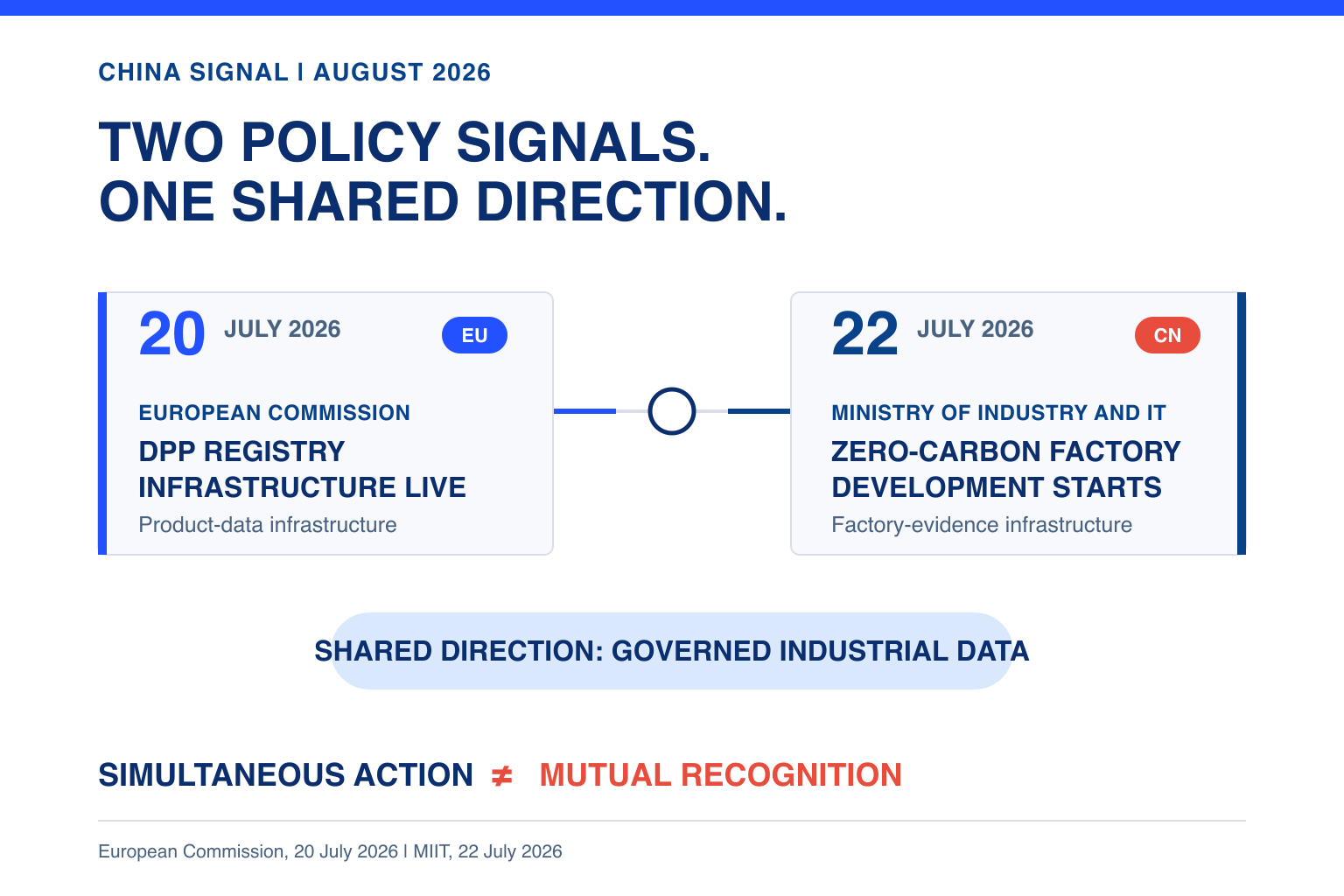
Figure 1 — A shared industrial direction does not create automatic regulatory equivalence.
Which Four European Decisions Can the Data Support?
The same factory evidence has a different use, limitation and completion requirement in each decision.
Import
Supports: Energy sources, process emissions, metering systems and traceable source data.
Does not replace: CBAM goods classification, EU calculation methods, prescribed verification or declarations.
The EU team must confirm: CN/HS goods scope, embedded-emissions boundary, importer responsibility and validation route.
Product
Supports: The energy and carbon baseline of the manufacturing site.
Does not replace: A product carbon footprint, lifecycle assessment or complete DPP dataset.
The EU team must confirm: Product allocation, material and process data, applicable rules, identifiers and data responsibility.
Procurement
Supports: Comparison of supplier governance, energy management and improvement capability.
Does not replace: A standardised supplier score or automatic qualification decision.
The EU team must confirm: Reporting period, assessment boundary, comparable indicators, evidence quality and the gap-closure plan.
Local Production
Supports: Source input for a China-versus-Europe make-or-buy assessment.
Does not replace: A completed cross-regional total-cost or carbon comparison.
The EU team must confirm: A common baseline, logistics, energy factors, capacity utilisation, product allocation and responsibility boundary.
Management should not begin with “Is this a zero-carbon factory?” It should begin by defining whether the team is making an import, product, procurement or local-production decision. Different decisions require different evidence thresholds.
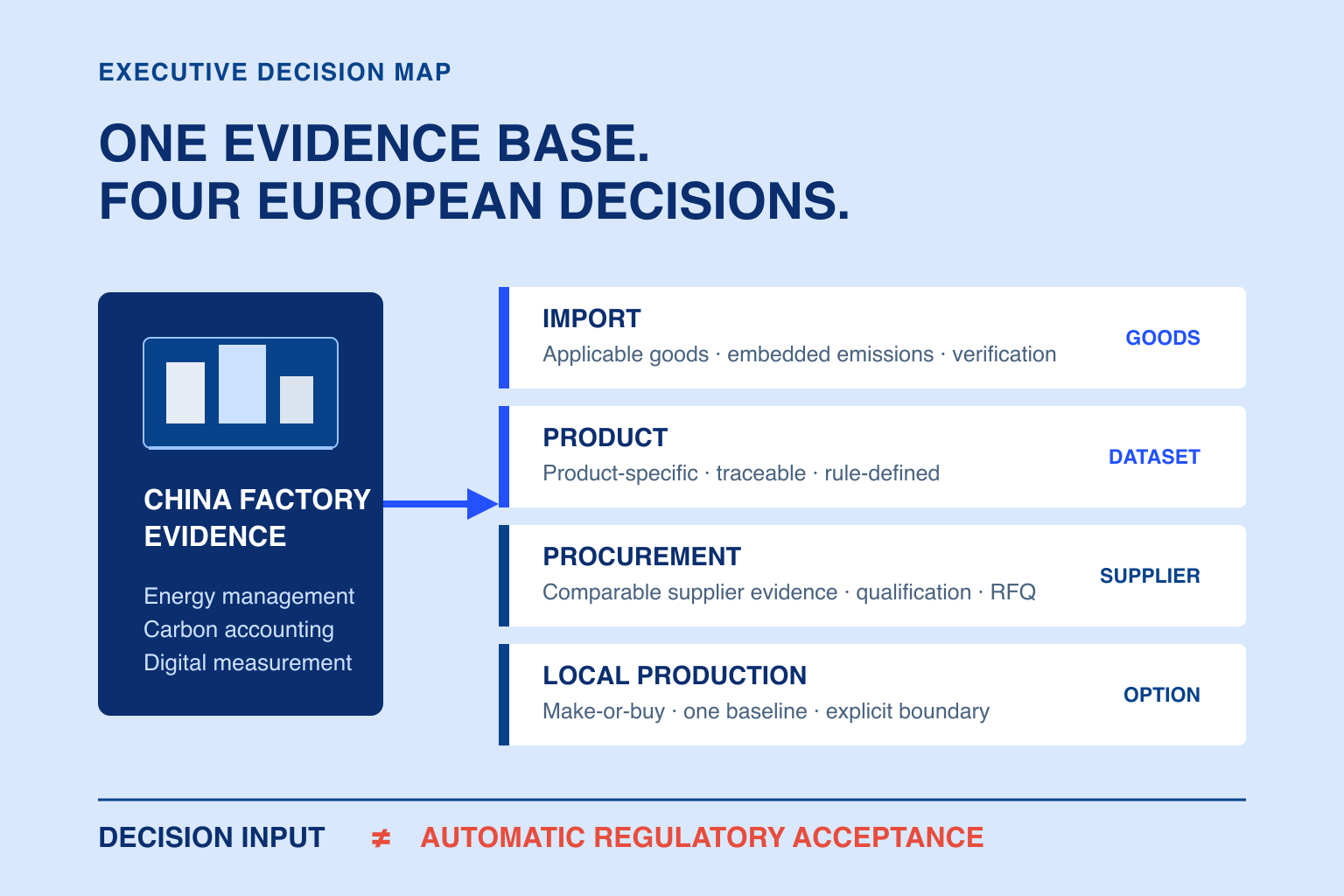
Figure 2 — Evidence value changes with the European decision it is meant to support.
Why Do Four Differences Stop Automatic Equivalence?
Evidence can be credible at its Chinese source and still be unusable at its European destination. Four elements must be translated.
Object. The Chinese status concerns a factory. The European decision may concern a CN/HS good, product, supplier, project or manufacturing option.
Boundary. A factory total may cover several production lines and products. The European use may require product allocation, embedded emissions for defined goods or a lifecycle boundary.
Method. Shared measurable, reportable and verifiable principles do not make the reporting period, emission factors, allocation rules or assurance requirements identical.
Responsibility. A Chinese supplier can provide data, but it cannot transfer the EU importer’s, manufacturer’s or economic operator’s responsibility back to the supplier.
Together, these differences determine Evidence Portability: whether credible Chinese evidence can be mapped to a defined European use without overstating what it proves.
What Evidence Should an EU Buyer Request from a Chinese Supplier?
At RFQ, supplier-qualification or project-approval stage, the European team should request a minimum evidence pack—not only a certificate, marketing page or factory-total figure.
1. Identity and Status
the construction-list or formal acceptance status and the exact factory name;
assessment or acceptance date, current validity and verifiable publication source;
whether the evidence covers one legal entity, one factory or a defined physical boundary.
2. Data Boundary
reporting period, baseline year and physical factory boundary;
included emission sources, energy types, purchased electricity and treatment of non-fossil energy;
inclusion and allocation of multiple products, production lines and outsourced processes.
3. Method and Source Records
accounting method, emission factors and unit conversions;
metering-point list, coverage, calibration records and treatment of missing data;
calculation chain and version history from source measurements to reported totals.
4. Product or Goods Mapping
the link between the target product, CN/HS good or project and the factory data;
allocation logic, production-volume basis and process route for unit data;
material, supply-chain, transport or lifecycle data where required.
5. Responsibility and Validation
supplier data owner and approver;
internal review or third-party validation already completed, including its exact scope;
remaining review, acceptance or verification required from the EU buyer, importer or manufacturer;
owner and deadline for every evidence gap.
The purpose is not to demand the same document volume for every project. Procurement comparison may need a reliable and comparable evidence pack. Regulatory acceptance may require a stricter method, documentation and validation route.
An Evidence Use Statement for the RFQ
SYY recommends using a one-page Evidence Use Statement before the supplier advances. The following is a management example, not an official EU form or legal document.
Supported use
To compare Supplier A and Supplier B on energy and carbon-data readiness for the target product and support the RFQ technical review.Non-substitution
This evidence does not replace CBAM goods-scope assessment, EU embedded-emissions calculations, a product carbon footprint, DPP applicability assessment or accredited verification.Evidence available
Factory boundary, 2025 energy data, metering-point list, accounting method, non-fossil energy documentation and national zero-carbon factory status evidence.Evidence gap
Target-product allocation, data for two outsourced processes, confirmation of applicable emission factors and the independent-validation scope.Owner and deadline
The Chinese supplier completes product-allocation and outsourced-process data within ten working days of quotation. The EU importer or appointed adviser confirms the applicable method and validation route. SYY tracks the evidence pack, open questions and closure status.
This converts “we have zero-carbon factory status” into an input that procurement, engineering, compliance and management can review together. It exposes the evidence gap during quotation—not after a customer, auditor or regulator asks for proof.
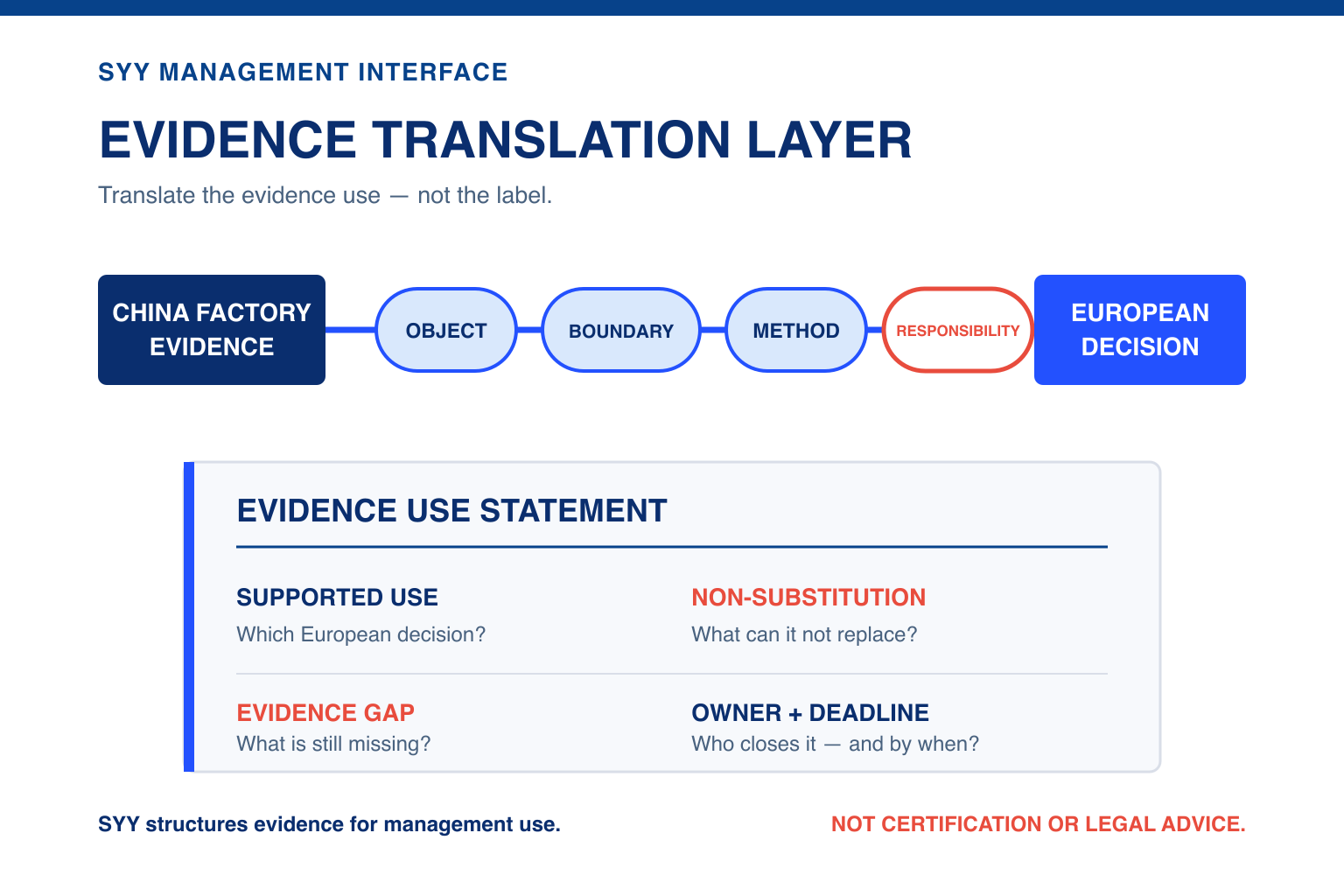
Figure 3 — Evidence Portability is a controlled translation process, not label recognition.
Two Common Misreadings: CBAM and DPP
CBAM does not mean that every machine imported from China requires the same carbon-data package. Applicability begins with whether the imported goods fall within the CBAM scope—not whether the supplier has zero-carbon factory status.
DPP is not currently a uniform obligation for every product. The ESPR establishes the framework and infrastructure, while the applicable product, information and timing depend on product-specific rules or other relevant EU legislation.
The European buyer should therefore define the target goods or product, applicable rule and intended decision before requesting supplier data. Collecting large volumes of documents first often produces more data but less decision clarity.
How Can SYY Support the Work?
SYY connects Chinese factory reality with European decision requirements. We can help an EU team:
check supplier identity, factory boundary and evidence source;
translate the European decision into supplier questions and an evidence list;
establish the Evidence Use Statement and maintain the evidence-gap register;
coordinate closure between the supplier, engineering, procurement and external specialists;
organise source data into comparable and traceable management input.
SYY does not certify zero-carbon factories, provide legal advice or act as an accredited emissions verifier. The applicable European operator and its qualified advisers remain responsible for the final applicability, legal conclusion and validation requirements.
If your team is evaluating carbon data from a Chinese supplier, send SYY the target product or goods, intended European use and current evidence pack. We can establish an initial Evidence Use Statement showing what is already usable, which requirements cannot be replaced and who should close each remaining gap.
Executive Conclusion
China’s national zero-carbon factory data can enter an EU buyer’s decision system, but it must first be translated from “factory status” into “evidence for a defined use”.
The reliable management sequence is to define the Import, Product, Procurement or Local Production decision; check Object, Boundary, Method and Responsibility; and then confirm the acceptance and validation route.
European recognition will not come from the label alone. It will come from evidence Europe can use.
Frequently Asked Questions
Does Chinese national zero-carbon factory status equal EU recognition?
No. It can provide a strategic signal, supplier-capability signal and source data, but it does not automatically replace an EU legal, product or validation requirement.
Is a factory on the construction list already a formal national zero-carbon factory?
No. Listed organisations must complete the development work, continue reporting and pass assessment and acceptance before they formally become national zero-carbon factories.
Can Chinese factory carbon data be used directly for CBAM?
For specific CBAM-covered goods, credible factory data may be useful source input. It must still match the applicable EU method, goods boundary, importer responsibility and verification route. Factory status itself is not CBAM verification.
Does every product entering the EU now require a DPP?
No. The DPP framework exists, but product scope, information requirements and timing depend on product-specific rules or other relevant EU legislation.
What should procurement request first at RFQ stage?
Start with an Evidence Use Statement, then request the minimum evidence pack for the defined decision. This prevents certificates, factory totals and product or regulatory evidence from being treated as interchangeable.
How should an EU buyer compare carbon data from two Chinese suppliers?
Normalise the reporting period, factory and product boundary, emission factors, allocation method, data quality and treatment of gaps. Without those common conditions, two apparently supported figures are not directly comparable.
Related Reading
Official Sources
Tags
Continue Reading
Explore related insights on the same topic.
The SYY Engineering Framework | Managing China Manufacturing Projects
Learn how the SYY Engineering Framework helps companies manage China manufacturing projects through engineering visibility, alignment and execution control.
China Supply Chain Reset: Strategic Opportunities for European SMEs (2025–2030)
China’s manufacturing supply chain is undergoing structural transformation. Discover why 2025–2030 may offer a unique opportunity for European SMEs working with Chinese suppliers.
Supplier Verification China: Why Most Supplier Decisions Fail Before Production — and What You’re Missing
Most supplier decisions in China fail before production even starts. Factories look convincing. Projects still fail. Because what you see during a visit is not what you get in execution.