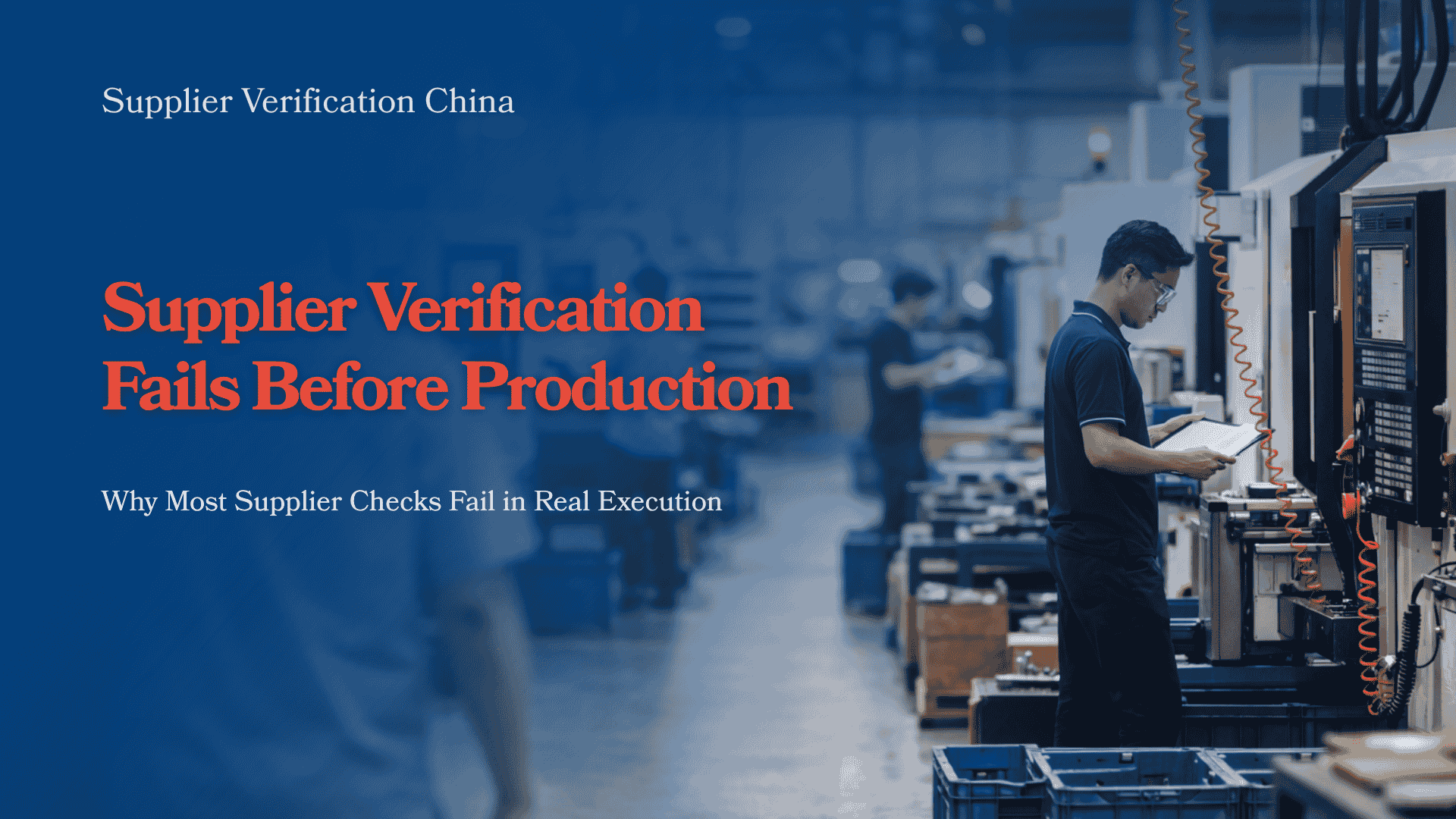
Supplier Verification China: Why Most Supplier Decisions Fail Before Production — and What You’re Missing
Most supplier decisions in China fail before production even starts. Factories look convincing. Projects still fail. Because what you see during a visit is not what you get in execution.
Supplier Verification China: Why Most Supplier Decisions Fail Before Production Begins
Most supplier decisions in China fail before production begins.
Not because factories are bad.
But because companies believe they have verified suppliers — when they have not.
The Illusion of Supplier Verification
Many companies think they are verifying suppliers when they:

What is discussed in meetings is often disconnected from what happens on the shop floor.
Visit factories
Check certificates
Review presentations
Exchange dozens of emails
Everything looks structured.
Everything feels under control.
But in reality:
No decision has actually been made.
Why Activity Is Mistaken for Verification
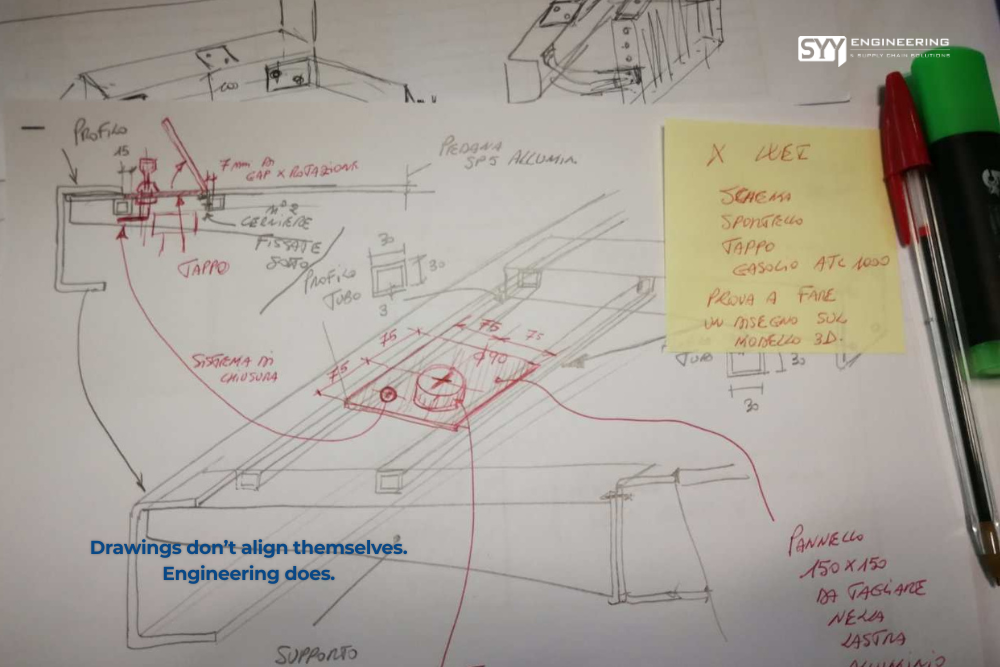
Unstructured communication often replaces real engineering validation.
A supplier visit creates visibility — not validation.
A meeting creates discussion — not alignment.
An email creates response — not execution.
What most teams call “verification” is actually:
Observation
Communication
Assumption
None of these confirm whether the supplier can execute the project.
What Goes Wrong Next
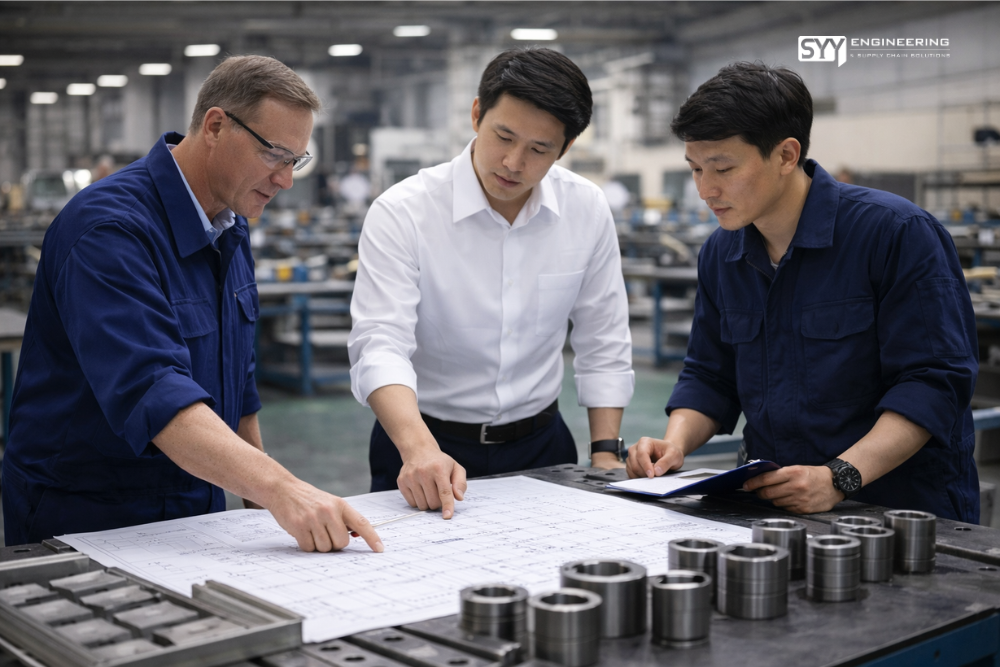
Execution depends on real engineering alignment — not assumptions.
The decision is made based on:
“The factory looks professional”
“They seem experienced”
“Communication is smooth”
The PO is sent.
The project begins.
And only then:
Misunderstandings appear
Process instability emerges
Delays begin to accumulate
At this point, it is already too late.
The Real Problem Is Not Execution
Most companies assume:
Problems happen during production.
But in reality:
Problems are decided before production starts.
Because:
The wrong supplier was selected.
Why This Keeps Happening
Supplier verification is misunderstood.
It is treated as:
A visit
A checklist
A communication process
Instead of what it actually is:
A decision moment.
If There Is No Clear Decision
Then there is:
No real verification
No control
No predictability
And the risk has already been accepted.
What This Means for You
If your current process looks like this:
Multiple supplier visits
Long discussions
Continuous email exchanges
No clear Yes / No decision
Then:
You are not verifying suppliers.
You are delaying the decision.
Before You Move Forward
Ask one question:
Have we actually verified this supplier — or only observed them?
What Real Supplier Verification Looks Like
See how supplier verification should actually work →
Frequently Asked Questions
What is supplier verification in China?
It is the process of confirming whether a supplier can actually execute a specific project—not just appear capable.
Why do supplier decisions fail before production?
Because decisions are made based on impressions, not verified capability and execution.
Are factory visits enough to verify a supplier?
No. A factory visit shows what is presented—not what will happen during production.
Final Thought
Supplier problems do not start in production.
They start at the moment the supplier is selected.
And by the time problems appear, the decision has already been made.
Tags
Continue Reading
Explore related insights on the same topic.
China Supply Chain Reset: Strategic Opportunities for European SMEs (2025–2030)
China’s manufacturing supply chain is undergoing structural transformation. Discover why 2025–2030 may offer a unique opportunity for European SMEs working with Chinese suppliers.
Can China’s Zero-Carbon Factory Data Support EU Buyers?
Can China’s zero-carbon factory data support an EU buyer’s import, product, procurement or local-production decision? The answer depends on evidence scope, method, responsibility and validation.
What Happens After CNC Machines Arrive in Europe: Understanding the Execution Gap
After 40 days at sea, CNC machines arrive in Europe — but execution starts here. This case reveals the often-overlooked gap between factory validation and on-site integration.